
Woven Stories, Painted
Memories: The Caxton House Mural

Project Impact
24
Social Engagement:
Delivering 44 hours Co-Design and painting community-led workshops
261
Participants
(voting on the design)
36 donated global fabrics for inspiration
5 volunteers
5
Months
Timeline March - Sept 2026:
27 Quilt Days (14 prep, cutting and piecing days, 10 patchwork workshops + 3 installation days)
9 days of professional painting
3 Unveiling celebrations
2
1 Hand-painted Mural
Size:
5.88m wide by 3.85m high
Framed by 1 Colossal Quilt:
5 panels approx. 160sqm of patched fabric
Before and After

BEFORE

AFTER
Partners


Speeches

The Story
1
Sharing Stories
Through a series of community workshops, local people brought in fabrics and textiles that reflected their cultures, identities and personal stories. Hundreds of beautiful and meaningful patterns, colours and materials came together, creating a rich collection of inspiration for the mural.

2
Co-Creating
the Design
Rose carefully brought together the community’s fabrics, selecting colours and patterns that worked beautifully together and creating a series of design options. 197 people at Caxton House then voted between two final designs, ensuring the community had the final say.

3
Bringing it
to Life
The winning design was transformed into a vibrant mural celebrating the cultures, stories and creativity of the Caxton House community. The finished artwork will be unveiled on 19 September by Jeremy Corbyn, bringing everyone together to celebrate what they created.
Gallery


About Our Design
The patterns held within each letter of the mural were inspired by fabrics, clothes and bedding donated by local people, representing the wonderful global community welcomed by Caxton House Community Centre.
As part of Caxton House's 50th Anniversary celebrations, a Colossal Quilt was created from these fabrics to cover the façade of the building. Over five months, the Recycle & Stitch Studio at the Centre worked with around 70 local people and volunteers to create patchwork blocks, which were then sewn together to create approximately 160 square metres of quilt.
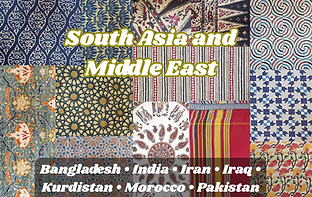
Donations included fabrics from Afghanistan, Bangladesh, England, France, Ghana, India, Indonesia, Iran, Iraq, Ireland, Italy, Kenya, Morocco, Scotland, Sierra Leone, Uganda, Spain and Sweden, as well as West African Ankara Wax Prints and many more.


C - This fabric is from West Bengal, India. It features traditional Kantha embroidery, a historic craft predominantly practiced by rural artisans in West Bengal and Bangladesh. Characterized by its delicate, rhythmic running stitches, Kantha traditionally repurposed old cotton saris into quilted textiles but has evolved into a highly celebrated artistry applied to new fabrics like Tussar silk.
A - The colours of the mural were inspired by the Caxton House 50th Anniversary palette, displayed throughout the celebration weekend’s branding, publicity and signage – designed by artist, Molly Shadbolt.
X - Inspired from a traditional hand-woven cotton wrap known locally as a Kikoy, from Uganda. While the wider Kikoy garment tradition is shared across the East African coast (such as in Kenya and Tanzania), the distinct combination of black, yellow, and red vertical stripes in the fabric example explicitly mirrors the national colours of the Ugandan Flag.
T - Inspired by Kente cloth (or nwentoma in the Asante dialect, which translates to "woven cloth"), it is a highly revered, iconic textile that originated with the Asante and Ewe peoples of Ghana. Handwoven on horizontal strip looms, each colour in authentic traditional Kente fabric holds symbolic meaning.
O - This fabric is a traditional Gara cloth, a West African resist-dyeing textile tradition primarily centered around Makeni and other regions in Sierra Leone. While early traditional styles relied purely on tying, folding, or starching the cotton with raffia before dipping it in natural indigo or kola nut dyes, modern artisans often utilize batik techniques to create geometric patterns.
N - The orange block colour provides a moment of visual rest within the mural, allowing the eye to move between the intricate textile-inspired patterns of the surrounding letters. The colour is taken from the Caxton House 50th Anniversary palette, designed by artist Molly Shadbolt, bringing the mural together with the wider anniversary celebrations.


H - This pattern is a traditional hand block-printed cotton fabric known as Ajrak, featuring a white lotus flower design, it originates from India and would commonly be known as a Nouchali pattern. Because it is handcrafted using traditional blocks and natural resist-dyeing methods, fabrics features slight, unique irregularities in the ink placement.
O - This pattern is inspired by two donated fabrics, Kente cloth from Ghana and from a beautiful Moroccan Fouta. Stripes of colour and fine weave showcase the skill used to make this fabric.
U – reflecting what we fondly call the ‘Caxton’ green, hues of this green can be found throughout Caxton House, in its window frames, Air Source Heat Pump, outdoors spaces and decorative elements in the building.
S - Flame stitch pattern in Bargello is a traditional counted needlepoint embroidery technique featuring vibrant, upright zig-zag patterns. Its origins can be found in Florence, Italy, but some say it dates back to the 14th-century in Hungary. Bargello embroidery has been a popular annual feature of the Caxton House craft group.
E - This pattern is based on a Celtic inspired fabric donated to represent the Irish community in the Centre and the long-standing Irish history of Archway.

We’d like to thank all the residents who donated fabric to our Recycle & Stitch Studio. It has been amazing to see the incredible and colourful variety of fabrics and how they showcase the wonderful community at Caxton House Community Centre.
The Colossal Quilt showed what can be achieved when a community comes together, united by shared purpose and generosity. It represents local creativity, connection and sustainable art, and its legacy lives on through the vibrant, community-designed mural created by Co-Creative Connection and Rose Hill.
Testimony's
Rose Collins - Creative
Coordinator Caxton House
Kevan
Recycle & Stich Studio
Sue
Caxton House Manager
We’d like to thank all the residents who donated fabric to our Recycle & Stitch Studio. It has been amazing to see the incredible and colourful variety of fabrics and how they showcase the wonderful community at Caxton House Community Centre.
The Colossal Quilt showed what can be achieved when a community comes together, united by shared purpose and generosity. It represents local creativity, connection and sustainable art, and its legacy lives on through the vibrant, community-designed mural created by Co-Creative Connection and Rose Hill.
Work with Us
Every community has a story to tell!
Let’s create yours together!
Start a conversation with Rose, click the button below:
